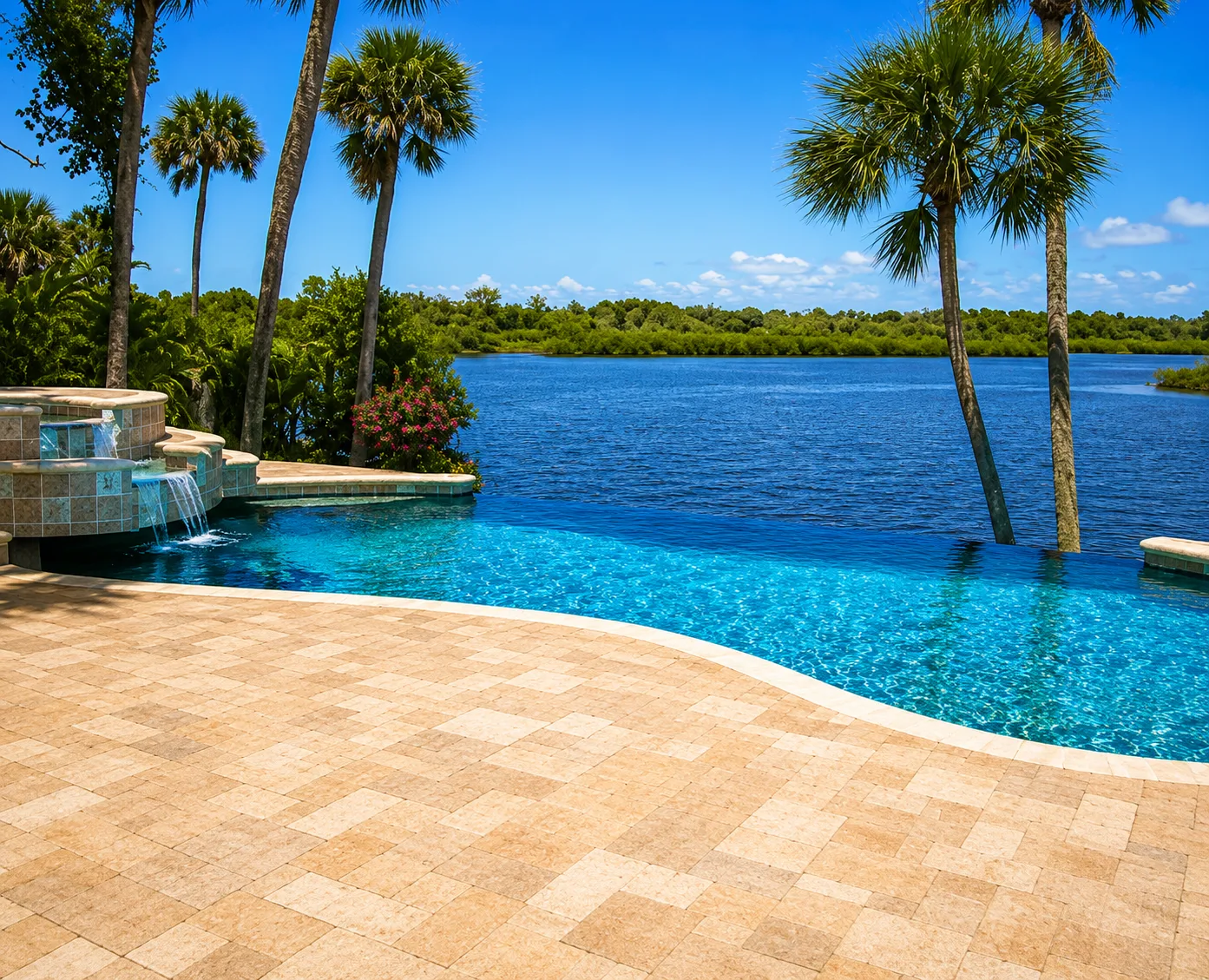
Yes—coastal pools often require different design and construction considerations than inland pools. Salt air, high water tables, sandy soils, and storm exposure all influence how a pool is engineered and built. The degree of adaptation varies by site, but coastal conditions consistently shape material choices, structural design, drainage planning, and construction sequencing.
Building a pool near the coast involves more than adapting to the environment after excavation begins. Site conditions must be evaluated early because groundwater levels, soil stability, corrosion exposure, flood zone requirements, and local building regulations can all affect how the pool is designed and constructed. Decisions made during planning influence everything from structural engineering and material specifications to permitting timelines and long-term durability.
This guide explains the construction methods commonly used for coastal pools, why they differ from those used in inland projects, and how experienced builders address the challenges posed by coastal environments. You'll learn how groundwater, sandy soils, salt exposure, drainage, hurricane considerations, and engineering requirements affect the construction process, helping you better understand what contributes to a durable, long-lasting coastal pool.
Why Does Building a Pool Near the Coast Present Unique Challenges?
Coastal properties introduce a combination of environmental pressures that inland sites typically don't face. Builders must account for these conditions from the earliest stages of design, not as afterthoughts.
Common coastal challenges include:
- Salt air and humidity that accelerate corrosion in metal components and pool finishes
- Sandy or unstable soils that require deeper footings or engineered foundations
- High water tables that complicate excavation and structural waterproofing
- Wind exposure that affects both construction logistics and long-term structural load
- Flood zone regulations that dictate how and where a pool can be sited
Each of these factors can affect construction timelines, material specifications, and overall project complexity.
High Water Tables
In many coastal areas, the water table sits close to the surface. During excavation, groundwater can infiltrate the dig site, complicating the pour and requiring dewatering systems. The pool shell must also be engineered to resist hydrostatic pressure—the upward force of groundwater pushing against the structure from below.
Sandy or Unstable Soils
Sandy soils are common near coastlines, but they don't provide the same bearing capacity as denser inland soils. Builders may need to compact the subbase, use engineered fill, or adjust the pool's structural design to account for soil movement and settling over time.
How Does the Pool Planning Process Change for Coastal Properties?
Planning a coastal pool begins with evaluating the property itself rather than selecting finishes or features. While every custom pool starts with a site assessment, coastal properties often require additional investigation because groundwater conditions, soil stability, flood zone requirements, and setbacks can directly influence the engineering, construction sequence, and final design.
Before construction begins, builders typically evaluate several site-specific factors, including:
- Soil conditions: Sandy soils, fill material, or unstable ground may require geotechnical evaluation or structural design adjustments.
- Groundwater levels: Understanding seasonal water table conditions helps determine excavation methods, hydrostatic protection, and drainage requirements.
- Property access: Limited access between neighboring homes or waterfront lots can influence equipment selection, staging areas, and construction sequencing.
- Flood zones and setbacks: Local regulations may establish minimum setbacks, finished elevations, or additional permitting requirements based on the property's location.
- Existing utilities and easements: Underground utilities, drainage infrastructure, and utility easements should be identified early to avoid conflicts during excavation.
Completing these evaluations before finalizing the pool design allows structural engineering, material selection, drainage planning, and permitting to be based on actual site conditions rather than assumptions. When site constraints are identified early, builders can coordinate excavation, engineering, and construction sequencing more efficiently while reducing the likelihood of redesigns, permit revisions, or unexpected delays later in the project.
How Does Salt Air Affect Pool Construction Materials?
Salt air is one of the most persistent threats to coastal pool components. Chloride ions carried by sea air accelerate oxidation of metals and degrade surfaces that would hold up well in an inland environment.
Materials and components most affected include:
- Standard steel reinforcement, which can rust and expand inside concrete, causing cracking
- Pump and filtration hardware, which corrodes faster without marine-grade coatings or materials
- Handrails, ladders, and deck fixtures, which show surface deterioration more quickly
- Coping and tile adhesives, which can break down under repeated salt and moisture exposure
Specifying corrosion-resistant alternatives from the start—rather than retrofitting later—is how experienced coastal pool builders protect a project's long-term value.
What Construction Methods Help Coastal Pools Last Longer?
Coastal pool construction isn't a different process—it's a more precise one. The core methods are the same as any quality pool build, but the specifications are tightened to account for environmental stress.
Reinforced Concrete and Structural Engineering
Gunite and shotcrete pools remain the standard for coastal builds because of their structural flexibility and strength. In coastal applications, builders typically increase steel rebar density, use higher-strength concrete mixes, and apply additional waterproofing membranes to the shell. Fiber-reinforced concrete adds another layer of crack resistance in shifting soil conditions.
Corrosion-Resistant Components
Every component that touches or surrounds the water should be specified for coastal use. That means:
- 316L marine-grade stainless steel for metal fittings, ladders, and anchors in high-exposure applications
- PVC or CPVC plumbing rather than metal pipe runs where possible
- Epoxy-coated or polymer equipment for pump housings and filter systems
- Salt-resistant pool finishes such as pebble or quartz aggregate, which outlast standard plaster in high-humidity environments
The specific rebar and reinforcement specifications are determined by the structural engineer based on site conditions, soil type, and local code requirements—not a single standard applied to every coastal project.
Artesian Pools integrates these material standards into every coastal project, ensuring that design quality is matched by long-term structural performance.
How Do Drainage and Groundwater Influence Pool Construction?
Drainage is a critical and often underestimated element of coastal pool design. Without proper drainage and hydrostatic planning, groundwater pressure can damage the pool shell or surrounding deck over time—a consequence that's far more costly to correct after construction than to address in the design phase.
Coastal builds typically require deck drainage systems that quickly move surface water away from the pool perimeter, French drains or curtain drains to manage groundwater around the shell, and backfill specifications that use permeable materials to prevent hydrostatic buildup. On sites with elevated water tables, sump systems may also be needed to manage groundwater at the base of the excavation.
On sites with high water tables, the pool must also be designed to resist flotation—the phenomenon where an empty pool shell can be pushed upward by groundwater pressure. This often requires engineered anchoring or deadman systems built into the shell, which are determined based on site-specific soil and groundwater conditions.
Are Coastal Pools Designed Differently for Hurricanes and High Winds?
In hurricane-prone coastal regions, pool construction must account for extreme wind loads and storm surge. This doesn't change the fundamental pool structure, but it does affect how surrounding elements are designed and anchored.
Heavier coping and deck anchoring help resist uplift forces, while equipment pads and enclosures are positioned and built to protect pumps and filters from wind-driven debris. Pool covers and safety systems may need to be rated for high-wind conditions depending on the jurisdiction. Setback and elevation planning also help reduce exposure to storm surge and flooding.
Coastal permitting requirements vary significantly by jurisdiction, flood zone classification, site elevation, and local environmental restrictions—and they often address these structural requirements directly. A builder familiar with the specific codes governing the project site is better positioned to navigate the permitting and inspection process and avoid costly revisions.
Do Coastal Pools Cost More Than Inland Pools?
Generally, yes. Coastal pool projects tend to carry higher construction costs than comparable inland builds. That cost difference reflects the additional engineering, materials, and permitting work involved—not a premium for geography alone.
Site Conditions That Increase Construction Costs
| Cost Factor | Inland Pool | Coastal Pool |
| Soil and foundation work | Standard excavation | May require engineered fill or compaction |
| Reinforcement steel | Standard rebar spec | Higher density, marine-grade or coated rebar |
| Pool finish materials | Standard plaster common | Salt-resistant aggregates recommended |
| Equipment and hardware | Standard-grade components | Marine-grade or corrosion-resistant spec |
| Drainage systems | Basic deck drainage | Extended drainage and hydrostatic planning |
| Permitting complexity | Standard local permits | Coastal zone, flood zone, and environmental reviews |
| Timeline | Typically shorter | Often longer due to additional site prep and review |
Understanding these cost drivers upfront helps homeowners budget accurately and avoid surprises mid-project.
What Should Homeowners Look for in a Coastal Pool Builder?
Not every pool builder has experience navigating coastal site conditions. Choosing the right contractor is one of the most important decisions in the process.
Key qualifications to look for include:
- Documented experience with coastal or waterfront pool projects
- Familiarity with local coastal building codes and flood zone requirements
- A material sourcing approach that defaults to corrosion-resistant specifications
- Relationships with local engineers and inspectors who understand coastal permitting
- A portfolio that includes pools in comparable coastal environments
A site assessment conducted early in the process is one of the clearest indicators of how a builder approaches coastal work. Evaluating soil conditions, groundwater depth, flood zone classification, and setback requirements before design begins grounds structural and drainage planning in actual site data rather than assumptions. Builders who sequence this work correctly—site assessment before design finalization, engineering review before permitting—tend to avoid the costly mid-project corrections that arise when site conditions surface late.
Can You Build a Custom Pool on a Coastal Property?
Yes. Coastal conditions add complexity to the construction process, but they don't limit design ambition. Infinity edges, custom water features, integrated spas, and high-end tile work are all achievable on coastal sites when the underlying engineering is done correctly.
The key is pairing design vision with sound structural planning from the start. When the foundation, shell, drainage, and material specifications are right, the design possibilities are just as broad as any inland project—and the coastal setting often adds a distinct visual context that complements ambitious pool designs.
Artesian Pools specializes in custom pool design and construction, bringing both the creative and technical expertise needed to deliver quality results in demanding coastal environments.
Build a Coastal Pool That Matches the Conditions of the Site
A coastal pool performs well when its design, materials, drainage, and structural planning are matched to the property's conditions. Salt air, groundwater, sandy soil, flood exposure, and storm risk must be evaluated before construction begins, as these factors affect the pool shell, equipment, finishes, drainage, and long-term durability.
Working with a builder experienced in coastal construction helps ensure these decisions are made early rather than corrected later. At Artesian Pools, coastal pool projects are planned with site conditions, structural requirements, corrosion resistance, and long-term performance in mind, so the finished pool is built for the environment it will actually face.