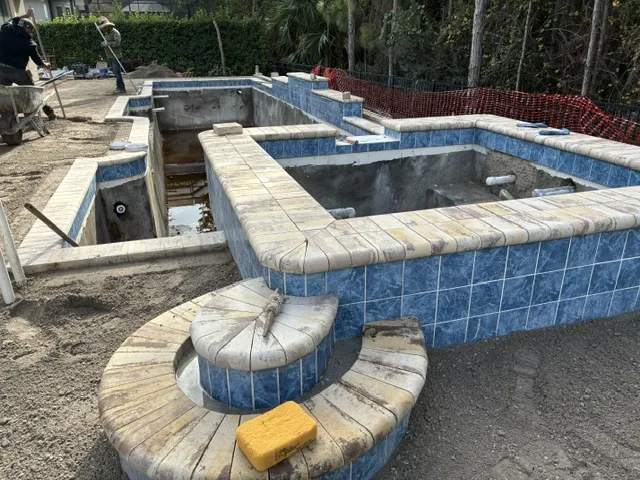
An older pool does not automatically need a complete renovation because its finish looks worn or its design feels dated. The real question is whether the visible problem is isolated or connected to deeper issues involving the shell, coping, deck, plumbing, drainage, equipment, or surrounding layout.
Some pools remain structurally sound and still fit the property well. In those cases, an experienced Daytona Beach pool builder can evaluate whether resurfacing or a coordinated renovation is more appropriate than a major structural remodel.
A larger remodel becomes more appropriate when several components are failing together, when recurring damage suggests an underlying problem, or when the existing design no longer supports safe access, comfortable use, drainage, or future backyard plans.
Daytona-area properties may also require closer evaluation because sandy soil, groundwater, heavy rain, salt exposure, storm conditions, and screen-enclosure connections can affect more than the visible pool surface.
This guide explains how to distinguish a limited pool update from a major remodel, which warning signs deserve further evaluation, and what homeowners should consider before choosing between resurfacing, renovation, or broader reconstruction.
What Is the Difference Between a Pool Update and a Pool Remodel?
A pool update improves selected surfaces or visible components without significantly changing the pool’s structure, function, or layout. A major pool remodel addresses several connected parts of the pool or corrects broader structural, functional, or design problems.
The terms pool remodeling and pool renovation are often used interchangeably. Resurfacing is more specific because it focuses primarily on replacing the pool’s interior finish.
Simple Update vs. Major Pool Remodel
| Project Consideration | Simple Pool Update | Major Pool Remodel |
| Main purpose | Refresh worn or dated surfaces | Correct broader structural, functional, or design problems |
| Pool shell | Generally remains unchanged | May require structural evaluation or modification |
| Interior finish | May be resurfaced | Usually replaced as part of a larger scope |
| Tile and coping | Replaced selectively or together | Coordinated with the broader pool and deck design |
| Pool deck | Limited or isolated improvements | Larger replacement, regrading, or layout changes |
| Plumbing | Usually remains unchanged | May require rerouting, replacement, or added lines |
| Equipment | Selected coordinated upgrades | Broader system changes may be included |
| Shape and depth | Remain the same | Selected modifications may be considered |
| Steps, benches, or ledges | Usually unchanged | May be added, removed, or redesigned |
| Project complexity | Limited scope | Multiple trades, permits, and construction phases |
| Best suited for | A sound pool with cosmetic wear | An aging pool with connected or substantial problems |
A pool should not be classified by age alone. A decades-old concrete pool with a sound shell and practical layout may need only resurfacing, while a newer pool with settlement, plumbing concerns, or an unusable design may require more extensive work.
What Are the Signs Your Older Pool Needs a Major Remodel?
An older pool may need a major remodel when several problems appear together or when the visible damage affects more than one part of the pool area.
Common warning signs include:
- Cracks that return after previous surface work
- Recurring or unexplained water loss
- Coping that has separated from the pool edge
- Widespread tile failure
- Deck sections that have settled or become uneven
- Standing water around the pool after rain
- Steps, benches, or entry points that are difficult to use
- Equipment placement that limits access
- A layout that no longer supports the household’s needs
- Several aging components that would be more practical to address together
A pool may initially appear to need only resurfacing, but loose coping, recurring water loss, and deck settlement can indicate that the pool edge, plumbing, and surrounding concrete should be evaluated together before a new finish is installed.
One worn component does not automatically justify a full renovation. A larger remodel becomes more appropriate when multiple systems are failing or when correcting one problem requires work on several connected areas.
Which Structural Problems May Require More Than a Cosmetic Update?
Cracks, movement, and separation between pool components may require further investigation when they extend beneath the visible finish.
Some cracks are limited to plaster or another interior surface. Others may relate to movement in the reinforced concrete shell, surrounding soil, deck, plumbing penetrations, or connected structures.
Conditions that deserve closer evaluation include:
- Cracks that widen or repeatedly return
- Water loss associated with a visible crack
- Movement around steps, benches, tile, or coping
- Uneven deck sections beside the pool
- Gaps between the pool deck and screen-enclosure footings
- Signs of settlement, washout, or water collecting beneath the deck
- Corrosion around embedded or exposed metal components
Leak testing, structural review, or selective demolition may be needed to identify the source. Structural evaluation and correction may also require coordination with an engineer or another appropriate specialist, depending on the condition and the contractor’s scope.
Daytona-area properties may be affected by sandy soil, groundwater, drainage, salt exposure, and storm-related saturation. These conditions can influence the shell, deck, equipment, and surrounding structures.
When Is a Simple Pool Update Enough?
A simple update may be enough when the shell, plumbing, deck base, equipment configuration, and overall layout remain functional.
Good candidates for a limited update often have concerns such as:
- A worn or discolored interior finish
- Dated waterline tile
- Aging but stable coping
- An appearance that no longer matches the home
- Isolated surface deterioration that has been evaluated
- A dated finish without recurring water loss or structural movement
For example, a concrete pool with a sound shell, stable deck, suitable depth, and comfortable entry may benefit from resurfacing with coordinated tile or coping replacement.
A smaller scope is not automatically a compromise. When the existing pool already fits the property and household, preserving the parts that still work may be more practical than rebuilding them.
Can Resurfacing Alone Solve Your Pool’s Problems?
Resurfacing can correct a worn interior finish, but it cannot repair structural movement, deteriorated plumbing, poor drainage, deck settlement, or an unsuitable layout.
Pool resurfacing generally involves preparing or removing the existing interior surface and applying a new finish. It can address roughness, staining, surface deterioration, and an outdated appearance.
Resurfacing may be sufficient when:
- The damage is limited to the interior finish
- The shell remains sound
- The pool holds water properly
- The plumbing and equipment configuration still function
- The tile, coping, and deck do not require extensive work
- The existing shape, depth, steps, and benches remain useful
When those conditions are not present, the cause of the deterioration should be understood before a new finish is applied. Otherwise, the new surface may cover the symptom without correcting the underlying problem.
What Improvements Are Typically Included in a Major Pool Remodel?
A major pool remodel may combine new finishes with structural corrections, deck work, plumbing changes, equipment coordination, and design improvements.
Common renovation categories include:
- Interior resurfacing
- Waterline tile replacement
- Coping replacement
- Pool deck renovation
- Structural crack evaluation and correction when included within the contractor’s scope or coordinated with the appropriate engineer or specialist
- Plumbing upgrades or rerouting
- Lighting changes
- Equipment-area changes coordinated with the remodel, such as relocation, drainage improvement, or access correction
- Step, bench, or ledge modifications
- Spa or water-feature changes
- Drainage corrections
- Screen-enclosure coordination
Selected changes to steps, benches, ledges, depth transitions, or portions of the pool footprint may be feasible, but structural engineering, existing plumbing, shell conditions, setbacks, and cost can limit what is practical.
Changing part of a concrete shell may require demolition, new steel reinforcement, plumbing changes, forming, and integration with the remaining structure. The work must be evaluated as a structural modification rather than treated as a cosmetic adjustment.
The exact remodel scope depends on the pool’s condition, the proposed design, and the services included in the contractor’s written proposal. Homeowners should confirm specific finishes, structural changes, equipment work, and surrounding improvements during the project evaluation.
How Are Tile, Coping, Decking, and Finishes Updated?
Tile, coping, decking, and the interior finish are often planned together because they meet at the pool edge and affect both appearance and elevation.
A broader remodel allows the contractor to coordinate:
- The interior finish and waterline tile
- Coping height and alignment
- Finished deck elevations
- Expansion and movement joints
- Drainage slopes
- Transitions to patios and covered areas
- Screen-enclosure footings and door thresholds
Deck work should address function as well as appearance. Uneven surfaces, poor runoff, narrow walkways, and awkward furniture areas can remain problems even after new materials are installed.
For screened pools, renovation planning may also need to account for enclosure anchors, footings, permits, drainage, and the relationship between the existing enclosure and new deck work.
Can Pool Equipment, Plumbing, and Lighting Be Updated During a Remodel?
Yes. Equipment, plumbing, and lighting changes may be coordinated with a major remodel when they support the broader renovation.
A larger project may create an opportunity to address:
- Poorly positioned return lines
- Deteriorated plumbing uncovered during demolition
- Plumbing needed for a revised spa, ledge, or water feature
- Outdated pool lighting
- Equipment located too close to active outdoor areas
- Components exposed to poor drainage or flood risk
- Controls that do not match the revised pool configuration
- Corroded hardware or fixtures
Daytona’s coastal environment can accelerate deterioration of exposed metal hardware, lighting components, fittings, fasteners, electrical connections, and equipment housings.
Equipment, plumbing, and lighting changes discussed here refer to work coordinated as part of a qualifying remodel or resurfacing project rather than isolated service calls.
Is It More Cost-Effective to Remodel an Older Pool or Build a New One?
Remodeling is often more practical when the existing pool shell, location, and basic dimensions remain suitable. More substantial reconstruction may deserve consideration when preserving the current pool would prevent the homeowner from achieving the needed result.
A remodel may be the better choice when:
- The shell remains structurally usable
- The pool occupies the right part of the yard
- The existing dimensions are generally acceptable
- The desired changes can be made without reconstructing most of the pool
- Existing improvements can be coordinated with the renovation
Substantial reconstruction may be considered when:
- The shell has extensive structural damage
- The pool is positioned poorly on the property
- Major depth or footprint changes are needed
- The design conflicts with drainage, access, or planned outdoor improvements
- The cost of preserving the existing pool approaches the cost of a broader reconstruction
Removing or substantially reconstructing an existing concrete pool may involve demolition, disposal, soil preparation, new engineering, and revised permitting, so it should not be treated as a simple alternative to remodeling.
The contractor must compare the limitations and cost of preserving the existing structure with the work required to reach the homeowner’s goals. On a coastal property, that evaluation may also include groundwater, flood-zone conditions, soil stability, site access, drainage, setbacks, and surrounding concrete.
How Long Does a Major Pool Remodel Typically Take?
A major pool remodel can take several weeks or longer, depending on the scope, permitting, inspections, material availability, weather, and conditions discovered after work begins.
A limited resurfacing project is generally shorter than a renovation involving deck removal, plumbing changes, structural work, shell modifications, or new features.
The schedule may include:
- Initial evaluation and design decisions
- Leak testing or structural review when needed
- Permit and engineering review
- Draining and preparing the pool
- Removing finishes, tile, coping, or deck sections
- Investigating concealed conditions
- Structural and plumbing work
- Installing new surfaces and materials
- Rebuilding affected deck areas
- Inspections
- Final finish application and curing
- Refilling and completion
After finishes, coping, or deck sections are removed, concealed cracking, deteriorated plumbing, voids, corrosion, or previous repair work may change the final renovation scope.
A written proposal should explain how concealed conditions will be handled. It should identify important allowances, exclusions, change-order procedures, and work that cannot be priced conclusively until demolition or testing is complete.
Coastal weather can also affect exterior renovation work. Heavy rain, storms, groundwater, and saturated soil may slow demolition, deck construction, structural corrections, or finish installation.
Projects involving screen-enclosure work may require separate permits, inspections, and coordination.
What Factors Have the Biggest Impact on Pool Remodeling Costs?
Pool remodeling costs depend on the existing condition of the pool and how many connected systems must be changed.
The largest cost factors commonly include:
- Extent of structural damage
- Pool size and depth
- Interior finish selection
- Amount of tile and coping being replaced
- Pool deck area and material
- Demolition requirements
- Plumbing or electrical changes
- Equipment coordinated with the remodel
- Step, bench, ledge, or spa modifications
- Drainage corrections
- Screen-enclosure coordination
- Access for crews and equipment
- Permits, engineering, and inspections
- Concealed conditions discovered after demolition
A simple surface update is less involved than a remodel that changes the pool edge, deck elevations, plumbing, reinforcement, and surrounding layout.
Coastal conditions may also affect the project. Corrosion-resistant materials, groundwater management, soil stabilization, drainage improvements, flood considerations, and additional engineering can increase complexity on some Daytona-area properties.
A pool remodel estimate should clearly identify the base scope, allowances, exclusions, owner responsibilities, and provisions for concealed conditions. Homeowners should also confirm which surrounding improvements are included in the contract and which require separate trades.
How Can a Remodel Improve the Appearance and Function of Your Backyard?
A well-planned remodel can make the pool easier to enter, more comfortable to use, and better connected to the surrounding patio.
A renovation may improve:
- Entry and exit points
- Shallow lounging space
- Seating inside the pool
- Lighting and visibility
- Deck drainage
- Furniture placement
- Spa access
- Equipment location
- Screen-enclosure coordination
- Movement between the home and pool
For example, an older rectangular pool may have steep steps, a large underused deep end, uneven coping, and a narrow deck. A remodel could preserve much of the existing shell while revising selected entry features, replacing surrounding materials, and improving circulation.
Another pool may look dated but function well. In that case, resurfacing with coordinated tile and coping may provide the desired result without changing the shell or layout.
The goal is not to make every older pool undergo a major renovation. It is to identify the changes that will meaningfully improve the condition and use of the space.
How Do Daytona’s Coastal Conditions Affect Pool Renovation Decisions?
Coastal conditions matter when pool deterioration involves more than the visible finish.
Salt air can affect exposed metal, lighting, fixtures, fasteners, electrical connections, and equipment housings. Sandy soil, elevated groundwater, heavy rainfall, and storm exposure can influence the pool shell, deck, drainage, and surrounding structures.
A Daytona-area renovation evaluation may consider:
- Whether cracks are limited to the finish or involve the shell
- Whether groundwater pressure has affected the structure
- Whether drainage directs water away from the pool and deck
- Whether settlement relates to soil movement, washout, or voids
- Whether metal components show corrosion
- Whether equipment is exposed to flood or drainage concerns
- Whether the screen enclosure and deck remain properly coordinated
- Whether current permitting or elevation requirements affect the proposed work
Not every Daytona pool will experience the same level of exposure. Conditions vary according to location, elevation, drainage, construction history, and distance from the coast.
Do Pool Renovations Require Permits and Inspections?
Some pool updates may require limited approvals, while structural, plumbing, electrical, deck, enclosure, or layout changes may require permits and inspections.
The requirements depend on the actual work proposed and the local jurisdiction. A resurfacing-only project may be treated differently from a renovation that changes the shell, plumbing, electrical system, deck, barrier, or enclosure.
Permit planning may need to address:
- Structural shell modifications
- Plumbing alterations
- Electrical or lighting changes
- Equipment relocation
- Deck replacement or elevation changes
- Screen-enclosure work
- Barrier and safety requirements
- Drainage or site-related improvements
The contractor’s written proposal should state who is responsible for permits, engineering, inspections, and coordination with separate trades.
What Questions Should You Ask Before Choosing Between Resurfacing and Remodeling?
Homeowners should ask whether the visible problem is isolated or part of a connected system failure.
Useful questions include:
- Is the damage limited to the interior finish?
- Has the pool been losing water?
- Is leak testing recommended?
- Do cracks return after previous work?
- Is the deck stable and draining correctly?
- Are tile and coping problems isolated or widespread?
- Does the existing depth and entry design still work?
- Are plumbing, lighting, or equipment changes already needed?
- Will deck work affect the screen enclosure?
- Would completing several improvements together reduce demolition and rework?
- Which permits and inspections apply?
- What parts of the existing pool will remain unchanged?
- What allowances and exclusions are included?
- How will concealed conditions be handled?
A qualified pool renovation contractor should explain the benefits and limitations of each option. A lower-cost surface update may not be responsible when deeper problems are present, while a major remodel may be unnecessary when the structure and layout remain sound.
How Do You Know if Your Pool Is Ready for a Major Remodel?
Your pool may be ready for a major remodel when its problems are structural, functional, or spread across several connected components. A simple update is more appropriate when the shell and surrounding construction remain sound and the concerns are limited to worn finishes or dated materials.
Start by separating what you can see from what may be causing it. Cracks, loose coping, uneven decking, recurring water loss, poor drainage, and repeated surface failures should be evaluated before a new finish is selected.
At Artesian Pools of Daytona Beach, older pools are evaluated according to the condition of the shell, finish, coping, deck, drainage, layout, and surrounding site. In our experience, the correct scope often becomes clearer when water loss, deck movement, and visible surface damage are evaluated together rather than treated as separate problems. That process helps determine whether resurfacing is sufficient or whether a coordinated remodel is needed.
The right scope is not necessarily the largest project. It is the level of work required to correct the pool’s actual problems and create a backyard that functions well over time.