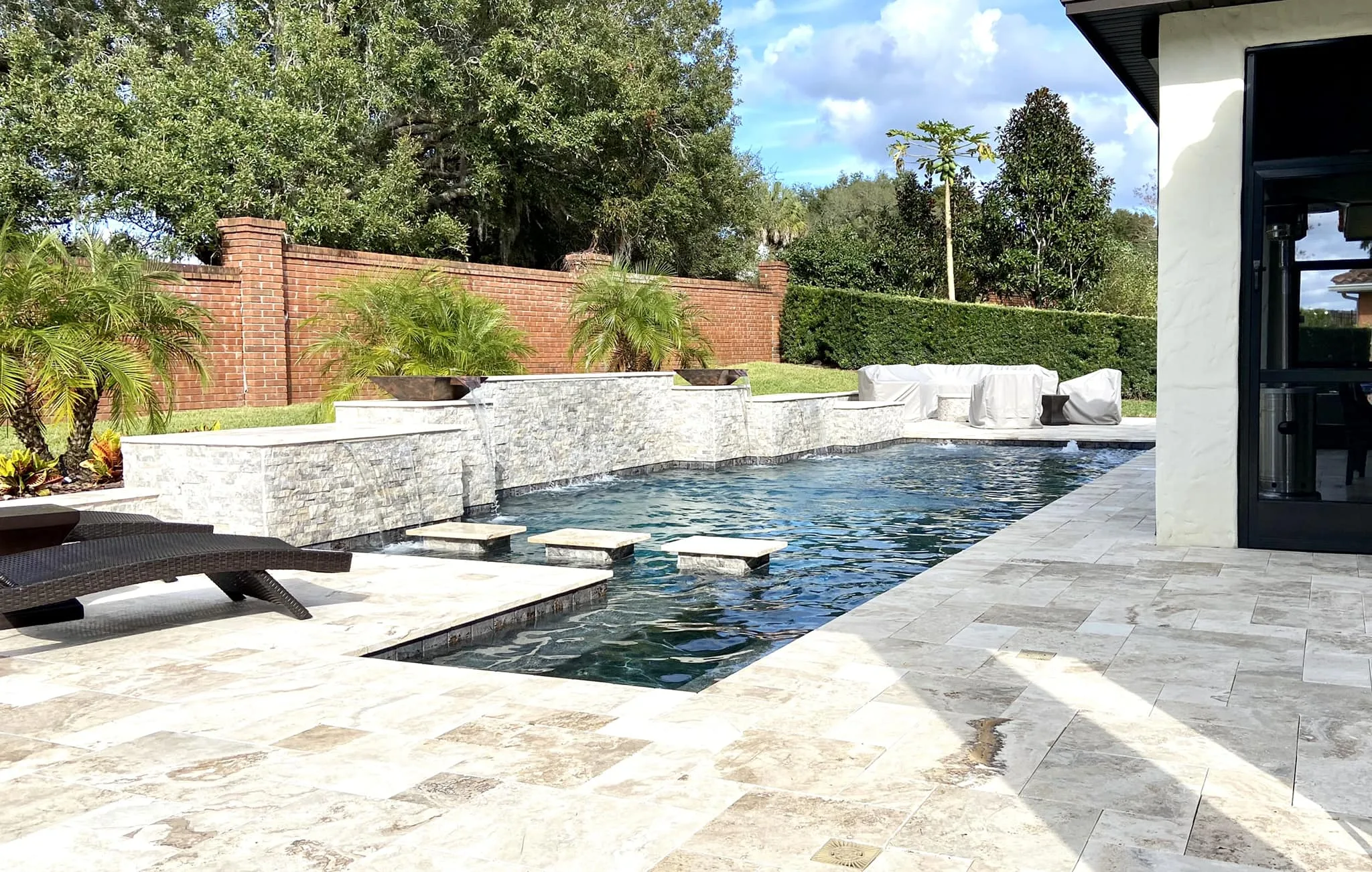
Planning an in-ground concrete pool in Orlando means thinking through space, safety, and local rules up front. This guide breaks down the key factors that determine how much room you’ll need on your property—backyard dimensions, minimum size recommendations, and how zoning and building codes shape your options. Understanding these elements helps you design a beautiful, usable pool that meets safety and legal requirements.
You’ll face practical decisions around layout, setbacks, permits, excavation, and construction access as you move from idea to build. This article clarifies those common pain points and walks you through permits, safety rules, construction realities, and typical costs by pool size so you can make confident decisions for your project.
What is the minimum space required for an in-ground concrete pool in Orlando?
The minimum space required for an in-ground concrete pool in Orlando depends on the pool size and the required clearances for safety and local regulations. Typically, a small concrete pool starts at about 10 by 20 feet, but you must add space around it for decking, equipment, setbacks, and construction access.
Key space requirements include:
- Pool footprint (e.g., 10x20 feet minimum for a small pool)
- Setbacks from property lines and structures (usually 5 to 10 feet, but these vary by jurisdiction and zoning classification)
- Space for pool decking and walkways (at least 3 to 5 feet around the pool)
- Room for pool equipment pads and filtration systems
- Access paths for construction, excavation equipment, and maintenance
- Pool-to-house spacing to accommodate foundation considerations, drainage slopes, and screen enclosure framing
These factors combined mean your backyard should be at least 20 to 30 feet wide and 30 to 40 feet long to comfortably fit a small concrete pool and meet Orlando-area regulations.
How big does your backyard need to be to fit a pool?
To fit a pool in your backyard, you need enough space for the pool itself plus extra room for safety, equipment, access, and construction staging. For example, a typical medium-sized pool (15x30 feet) requires a backyard at least 35 feet wide and 45 feet long.
Factors that determine if your yard can fit a pool include:
- Local setback requirements from property lines and buildings, which vary between the City of Orlando, Orange County, and HOA-controlled communities
- Existing landscaping, trees, fences, and utility lines
- Space for pool decking and circulation
- Access for construction equipment, excavation machinery, and future maintenance
- Temporary staging space for steel, plumbing, gunite hoses, and finish materials
Here’s a simple example of backyard sizes and what pools they can accommodate:
| Backyard Size | Pool Size Possible | Notes |
| 20x30 feet | Small (10x20 ft) | Tight fit; minimal decking |
| 35x45 feet | Medium (15x30 ft) | Comfortable space for decking, equipment, and staging |
| 50x60 feet | Large (20x40 ft) | Room for custom features, landscaping, and construction access |
Why are concrete pools better for smaller or irregular yards?
Concrete pools offer greater flexibility in shape and size compared to other pool types, making them ideal for smaller or irregularly shaped yards. Unlike vinyl or fiberglass pools, concrete pools can be custom-designed to fit unique spaces and contours.
Benefits of concrete pools for challenging yards include:
- Custom shapes to maximize usable space
- Ability to build around existing landscaping or structures
- Durability that supports complex designs and features
- Options for built-in benches, tanning ledges, and spas that optimize space
This flexibility helps homeowners in Orlando with limited or oddly shaped yards still enjoy a beautiful, functional pool.
What setbacks and local regulations affect pool placement in Orlando?
Orlando-area zoning laws and building codes set specific setbacks and rules that affect where you can place a pool. These regulations protect safety, privacy, and neighborhood character.
Key setback and regulation factors include:
- Minimum distance from property lines (usually 5 to 10 feet, but setbacks vary by jurisdiction and zoning classification, so exact requirements must be confirmed during permitting)
- Distance from structures like houses, sheds, and fences
- Pool-to-house spacing to accommodate foundation considerations, drainage slopes, and screen enclosure framing
- Clearance from utility easements and underground lines
- Requirements for pool enclosures, fencing, and gates
- Permitting and inspection processes before construction
Ignoring these rules can cause delays, fines, or costly redesigns, so early consultation with Orlando’s planning department or a licensed contractor is essential.
How much extra space is needed for decking and equipment?
In addition to the pool itself, you need extra space for decking, walkways, and pool equipment. This space ensures safety, comfort, and proper function.
Typical space requirements include:
- Decking and walkways: 3 to 5 feet around the pool perimeter
- Pool equipment pads: 4x6 to 6x8 feet for pumps, filters, heaters, and other systems
- Access paths: At least 3 feet wide for maintenance and repairs
Pool equipment pads and filtration systems
Equipment pads must be located close enough for plumbing and electrical connections but far enough to meet safety codes and reduce noise impact on the home. Considerations include:
- Noise distance from living areas
- Electrical requirements and safe wiring clearances
- Plumbing runs to minimize pipe length and maintain efficiency
- Heater clearance for ventilation and maintenance access
Proper placement affects overall space planning and may require additional yard area.
Can a pool fit in a narrow or irregular Orlando backyard?
Yes, a concrete pool can often fit in narrow or irregular yards due to its customizable design. Narrow pools as small as 8 to 10 feet wide can be built, and freeform or L-shaped designs can adapt to unusual lot shapes.
However, factors like setbacks, access for construction equipment, and space for safety barriers still apply and may limit options.
How does backyard access affect pool construction?
Backyard access is critical for pool construction and often determines feasibility more than yard size. Excavators, steel delivery trucks, and concrete trucks need access to the backyard. If the only entry is a narrow side yard or gate under 6–8 feet wide, additional labor or specialized equipment may be required, increasing costs and complexity.
Homeowners should assess:
- Gate width and height
- Pathway surface and slope
- Obstructions like trees, fences, or utility lines
- Space for temporary staging of steel, plumbing, gunite hoses, and finish materials
Early planning helps avoid surprises and ensures a smooth construction process.
What pool shapes work best in a limited space?
In a limited space, certain pool shapes maximize usability and fit better.
Popular shapes for small or irregular yards include:
- Rectangular pools for efficient use of narrow spaces
- L-shaped pools to separate shallow and deep areas
- Freeform pools that follow natural yard contours
Plunge pools and cocktail pools
Plunge pools and cocktail pools are compact options ideal for very small yards. They typically measure 8 to 12 feet in length and provide a refreshing swim or a relaxation area without requiring much space.
What are common mistakes homeowners make when planning pool space?
Common mistakes include underestimating required setbacks, ignoring equipment space, overlooking access paths, and failing to consider construction staging needs. Some homeowners also fail to consider local regulations early, leading to redesigns or permit delays.
To avoid these issues:
- Consult local zoning and building codes before planning, noting that setbacks vary by municipality and HOA rules
- Include space for decking, equipment, safety barriers, and construction staging
- Assess backyard access for excavation and construction equipment needs
- Work with licensed contractors familiar with Orlando-area rules and construction realities
How to find out if your Orlando backyard has enough space for a concrete pool
The best way to determine if your backyard can fit a concrete pool is to start with a professional site evaluation. A licensed pool contractor or Orlando planning official can assess your yard’s dimensions, setbacks, access, drainage, and existing features.
Steps to take:
- Measure your backyard’s length, width, slope, and drainage patterns
- Identify property lines, easements, and existing structures
- Check local setback and permitting requirements, noting differences between City of Orlando, Orange County, and HOA regulations
- Discuss pool size, shape options, and construction access with a contractor
- Review equipment, decking, and construction staging space needs
- Evaluate soil stability, compaction, and high water table management for excavation
- Consider structural clearance between the pool shell and property structures, as well as screen enclosure footprint requirements common in Orlando
This process provides a clear, realistic picture of what pool options fit your yard and budget.
| Pool Type | Typical Minimum Space Required | Flexibility for Small or Irregular Yards |
| Concrete Pool | 20x30 feet (including decking, equipment, and construction access) | High – custom shapes and sizes |
| Vinyl Liner Pool | 25x35 feet (including decking and equipment) | Moderate – allows some customization but depends on panel systems and liner shapes |
| Fiberglass Pool | 25x35 feet (including decking and equipment) | Low – factory-molded shapes with limited customization |
Work With an Orlando Pool Builder Who Understands Space, Setbacks, and Construction Realities
Planning an in-ground concrete pool in Orlando involves much more than choosing a size or shape. Backyard space, local setback requirements, construction access, equipment placement, drainage, and permitting all affect what can realistically be built on a property.
Because of these variables, two yards with similar dimensions can have very different pool options once zoning rules, access paths, soil conditions, and structural considerations are taken into account. That’s why experienced builders begin every project with a careful site assessment before moving into the design phase.
At Artesian Pools, we regularly evaluate Central Florida properties with tight access points, irregular lot shapes, HOA restrictions, and varying setback requirements. Our team reviews property dimensions, excavation access, equipment placement, drainage conditions, and structural clearances to determine what type of concrete pool will work best on a specific lot.
Starting with a professional site evaluation helps homeowners understand their realistic options before design and permitting begin. It also reduces the risk of redesigns, delays, or unexpected construction issues during the build.
If you’re considering installing a custom in-ground concrete pool in the Orlando area, Artesian Pools can evaluate your property and help you determine what pool size, layout, and construction approach will work best for your space.