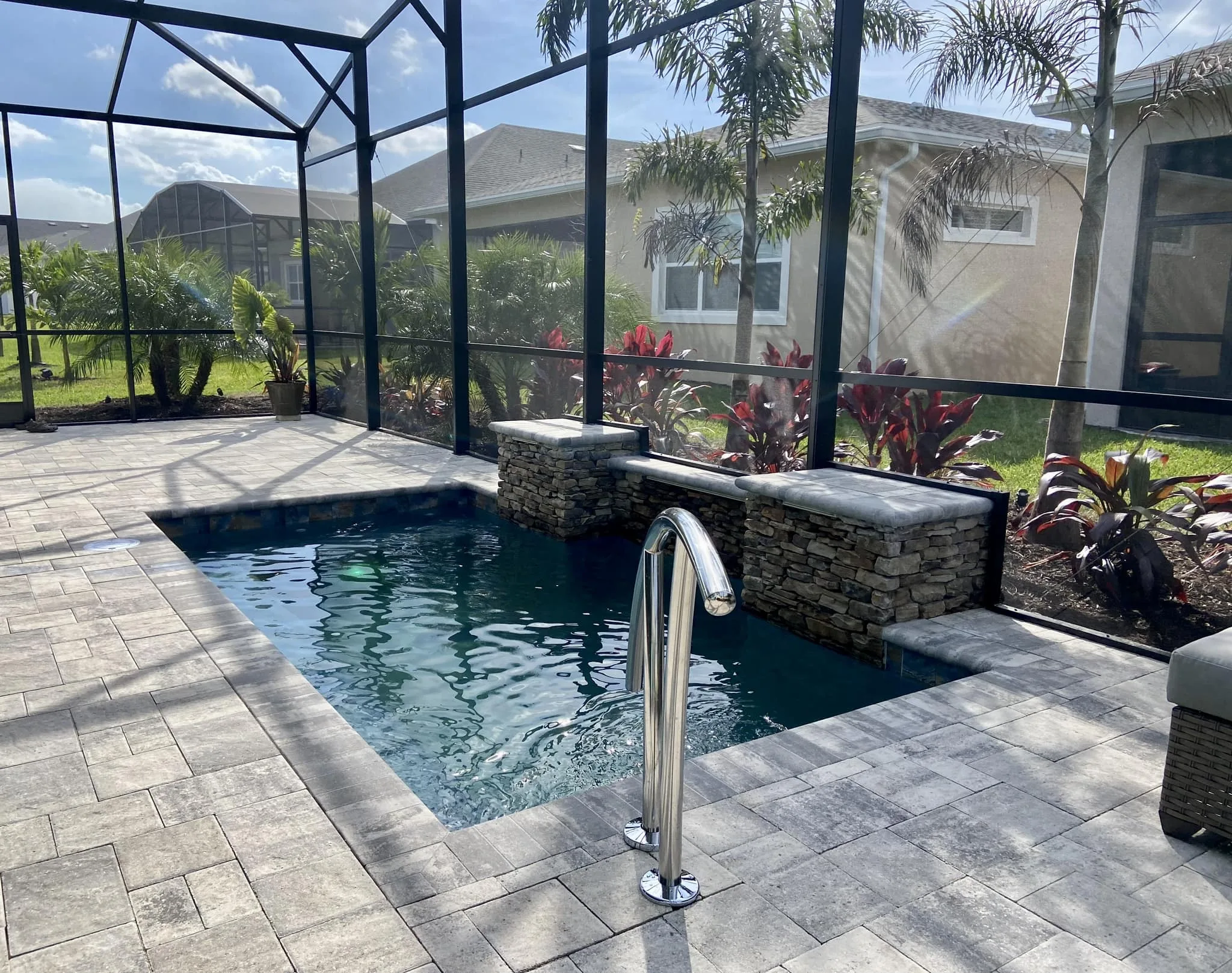
Many Orlando homeowners wonder whether their backyard is simply too small for a pool—especially when dealing with narrow lots, screened enclosures, or strict setback requirements. While limited space can present challenges, a custom concrete pool offers far more flexibility than pre-molded options, allowing it to be designed around irregular shapes, tight footprints, and unique property constraints.
That flexibility doesn’t mean every yard is suitable, but it does mean size alone isn’t the deciding factor. With thoughtful planning and guidance from experienced Orlando pool builders, many small backyards can accommodate a functional, well-designed concrete pool that fits both the space and the homeowner’s goals.
Can a custom concrete pool fit in a small Orlando backyard?
In many cases, a concrete pool can be designed for small Orlando backyards, offering significant flexibility in shape, size, and features to maximize even limited space. Unlike pre-fabricated options, concrete pools are built on-site, allowing for precise customization to your yard's unique dimensions and constraints. However, feasibility depends on setbacks, access, and critical construction tolerances, such as steel placement and bond beam width.
This means you can have a refreshing swim space tailored to your lifestyle, even if your property has narrow sections, unusual angles, or specific setback requirements common in Orlando neighborhoods.
What qualifies as a “small” backyard for a pool in Orlando?
In Orlando, a "small" backyard for a pool typically refers to lots with limited square footage, often constrained by property lines, easements, utility lines, or existing structures like screened enclosures. Yards measuring 20x30 feet or less, or those with significant non-buildable areas, are often considered small.
However, "small" is relative; what matters most is the usable space after accounting for local zoning, setbacks, and access. Concrete's adaptability is key to making the most of these compact footprints.
Why concrete pools are often chosen for tight lots in Orlando
Concrete pools are often chosen for small yards because they offer greater customization than fiberglass pools. Built on-site, concrete allows for precise tailoring to irregular shapes, tight corners, and specific dimensions that pre-molded fiberglass shells cannot accommodate. Fiberglass pools come in fixed shapes and sizes, which can be challenging to fit into non-standard or very compact spaces.
This on-site construction means a concrete pool can hug property lines, incorporate built-in features, and adapt to unique lot conditions, maximizing every available inch of your Orlando backyard.
| Feature | Custom Concrete Pools | Fiberglass Pools |
| Shape Flexibility | Unlimited; can be custom-designed for any irregular space. | Limited to pre-molded factory shapes and sizes. |
| Built-in Features | Seamlessly integrates benches, tanning ledges, spas, and steps. | Features are pre-designed into the mold, making it less customizable. |
| Site Adaptability | Ideal for tight corners, narrow lots, and challenging terrain. | Requires a relatively clear, standard-shaped excavation. |
| Installation | Built on-site, allowing for precise adjustments during construction. | Shell is delivered and dropped in; transport can be an issue for large shells. |
What pool shapes work best in tight or narrow backyards?
For tight or narrow Orlando backyards, plunge pools, lap pools, and freeform designs are often the most effective, as they maximize usable water space while adapting to challenging footprints. These designs prioritize function and efficient use of limited ground area.
- Plunge Pools & Cocktail Pools: These are compact, deep enough for a refreshing dip, and can include built-in seating or jets without taking up much ground area. They are perfect for cooling off and socializing.
- Lap Pools: Characterized by their narrow, elongated layouts, lap pools fit well alongside fences or between structures. They provide a practical option for exercise in a limited footprint, often enhanced with swim jets for resistance.
- Freeform Designs: Organic, irregular shapes can tuck into corners, follow property lines, or wrap around existing landscaping. This gives a relaxed look while efficiently utilizing odd or irregular spaces that geometric pools might struggle with.
- Geometric Designs: While less adaptable to irregular lots, simple rectangular or L-shaped pools can be highly efficient in yards with straightforward dimensions, offering clean lines and maximizing swim area.
What space limitations can prevent pool installation?
Several critical space limitations can prevent or significantly complicate pool installation in Orlando, including strict setbacks, utility easements, and insufficient access for construction equipment. Understanding these constraints early is crucial for successful planning, as even a technically "fitting" design on paper may not be buildable once excavation and structural tolerances are applied.
- Setbacks: Local Orlando and Orange County zoning ordinances require specific distances from property lines, structures (like your home or screened enclosure), and conservation areas. These non-buildable zones can significantly reduce the available space, and often dictate the minimum required working room for construction, not just the final pool footprint.
- Easements: These are legal rights for utilities (water, sewer, power, drainage) that run across your property. Construction is typically prohibited within easements, which can severely restrict where a pool can be placed. In some cases, these limitations mean a pool simply isn't feasible.
- Utility Lines: Both underground (sewer, water, gas, electrical) and overhead lines must be identified and avoided. Relocating these can be extremely costly and complex, sometimes making a site unfeasible.
- Existing Structures: Large trees, sheds, patios, or extensive screened enclosures may need to be removed or significantly modified, which would add to project complexity and cost.
- HOA Rules: Many Orlando communities have Homeowners Association rules that dictate pool size, placement, screening, and even design aesthetics, which must be adhered to.
How does access to the backyard affect pool feasibility?
Limited backyard access significantly impacts pool feasibility and cost, as it dictates whether heavy excavation equipment can reach the site or if more labor-intensive, smaller machinery is required. A standard bobcat or mini-excavator typically needs a minimum width of 6-8 feet to enter the backyard.
If access is narrower, builders may need to use smaller equipment, perform manual excavation (hand-digging), or even crane materials over the house. These are not standard solutions but last-resort options that drastically increase labor time, project complexity, and overall expenses. For instance, hand-digging can add tens of thousands to the cost, and craning requires specialized logistics and permits, making a project potentially cost-prohibitive.
Can features like spas or tanning ledges fit in a small pool design?
Yes, with clever design, features such as integrated spas, tanning ledges, and built-in seating can be incorporated into small custom concrete pools, enhancing functionality without overwhelming the space. Concrete's flexibility allows these elements to be seamlessly molded into the pool shell itself.
This integration means they don't require additional separate structures that would consume precious patio space. Compact water features, bubblers, and strategic lighting can also add luxury and ambiance to a smaller footprint.
How much does a small custom concrete pool cost in Orlando?
The cost of a small custom concrete pool in Orlando typically ranges from $40,000 to $70,000+, depending on size, design complexity, finishes, and site-specific challenges. It's important to note that while smaller pools require less material, they don't scale linearly cheaper. Fixed costs such as engineering, permitting, equipment mobilization, and initial site prep remain significant regardless of pool size, so a small pool can still represent a substantial investment.
| Cost Factor | Description | Impact on Cost |
| Size & Depth | Overall dimensions and specific depth requirements. | Moderate (smaller is generally less, but custom depth adds complexity). |
| Design Complexity | Irregular shapes, multiple levels, or intricate custom features. | High (more complex formwork and labor). |
| Finishes | Choice of interior surface (plaster, pebble, tile) and coping materials. | Moderate to High (premium finishes increase cost). |
| Site Conditions | Excavation difficulty, soil type, drainage, and backyard access challenges. | High (can require specialized equipment or additional labor). |
| Additional Features | Integrated spa, tanning ledge, lighting, water features, automation. | Moderate (each feature adds to the total). |
What are the common mistakes homeowners make with small backyard pools?
Homeowners often make mistakes such as underestimating setback requirements, failing to consider construction access, or overdesigning features that overwhelm a small space. These oversights can lead to costly delays or design compromises.
- Ignoring Local Regulations: Not thoroughly checking Orlando/Orange County setbacks, easements, and HOA rules early in the planning process can lead to redesigns or permit rejections.
- Poor Site Assessment: Overlooking critical factors such as utility lines, significant slopes, or difficult soil conditions can lead to unexpected expenses and construction challenges.
- Over-Complicating Design: Trying to cram too many features (e.g., a large spa, multiple water features, and extensive decking) into a tiny footprint can make the yard feel cluttered and less functional.
- Neglecting Access: Failing to plan for how excavation equipment and construction materials will get into and out of the backyard can cause significant logistical and cost issues.
- Budgeting for Pool Only: Forgetting to include costs for necessary elements like decking, landscaping, fencing, and permits can lead to budget overruns.
How to Tell If Your Orlando Backyard Can Support a Custom Concrete Pool
The most reliable way to know whether your backyard can accommodate a custom concrete pool is through a professional site evaluation. An experienced Orlando pool builder can assess your property’s layout, constraints, and opportunities—then explain what’s realistically possible before any design decisions are made. This step focuses on how your space can actually be used, considering not just zoning approval but also the practicalities of construction.
What a Pool Site Evaluation Looks At
A proper site evaluation goes beyond simple measurements. It identifies the factors that determine whether a pool can be built—and how it should be designed to fit your space.
During an evaluation, a builder will typically review:
- Usable space — measuring the yard while accounting for existing structures, patios, or screened enclosures
- Setbacks and easements — identifying non-buildable areas required by Orlando or Orange County regulations, and assessing the necessary working room for construction equipment and personnel.
- Utilities and infrastructure — locating underground and overhead lines that affect placement, including potential conflicts with steel placement and gunite application.
- Soil and drainage conditions — assessing stability, slopes, and water movement that impact construction, with particular attention to Orlando's sandy soils and potential groundwater issues that can affect excavation and structural integrity.
- Construction access — confirming how equipment and materials can safely reach the backyard, and evaluating the feasibility of different excavation methods.
- Design goals — discussing which features matter most and how they can fit within your available space, while also acknowledging when a desired feature or even a pool itself might not be feasible due to site limitations.
- Inspection Requirements — outlining the various stages of inspection (e.g., steel, plumbing, gunite, final) required by local authorities, which influence the construction timeline and process.
This process helps avoid redesigns, permit issues, unexpected costs, and ensures the proposed pool is not only permitted but truly buildable.
Determine Your Backyard's Pool Potential
A small backyard doesn’t automatically limit your options—but it does make careful planning essential. With accurate measurements, a clear understanding of local requirements, and thoughtful design choices, many Orlando homeowners discover more flexibility than they expected. At the same time, it’s important to recognize when site constraints make a pool impractical, even with the advantages of custom concrete construction.
The next step isn’t committing to a design—it’s gaining clarity. A site-specific evaluation helps confirm what’s possible, identify limitations early, and ensure feasibility is established before any design or construction decisions are made. For homeowners looking to better understand their options, working with an experienced local builder like Artesian Pools can provide valuable insight into what your backyard can realistically support.