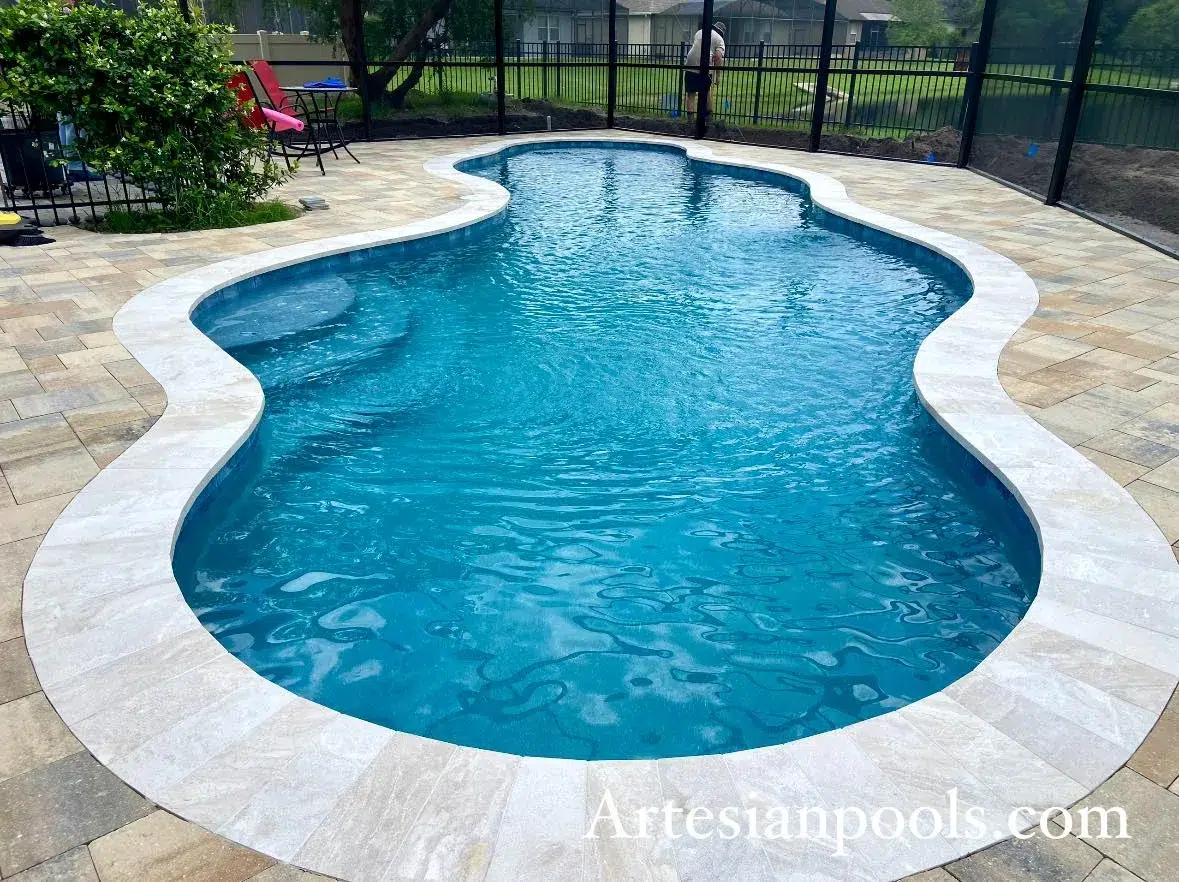
Choosing a pool for your Florida home is a significant investment, and the decision between concrete and fiberglass often comes down to more than just aesthetics. As experts who have installed thousands of pools across Florida, we understand the unique challenges our climate presents—from sandy soils and high water tables to intense UV and hurricane risks. This guide cuts through the noise to give you a transparent, expert perspective on which pool type truly offers the better long-term value for your property.
What’s the Main Difference Between Concrete and Fiberglass Pools?
The fundamental difference lies in their construction: concrete pools are custom-built on-site from scratch, while fiberglass pools are pre-fabricated shells delivered and installed as a single unit.
Concrete (often called gunite or shotcrete) pools are formed by spraying a cementitious mix over a rebar framework, allowing for limitless shapes and depths. Fiberglass pools are molded in a factory, resulting in a smooth, non-porous shell with a fixed design.
Feature Comparison: Concrete vs Fiberglass Pools
| Feature | Concrete Pool (Gunite/Shotcrete) | Fiberglass Pool (One-piece Shell) |
| Structure | On-site rebar skeleton with sprayed cement; highly customizable. | Factory-molded composite laminate shell; fixed shapes. |
| Installation | Months (excavation, rebar, plumbing, shotcrete, curing, finishes). | Weeks (site prep, crane set, plumbing, backfill). |
| Lifespan | Decades with proper maintenance and periodic resurfacing. | Long service life; gelcoat may require localized repairs. |
| Customization | Nearly unlimited shapes, depths, features, and finishes. | Limited to available factory molds and sizes. |
| Maintenance | Higher chemical use, more brushing, periodic resurfacing (8-15 years). | Lower routine maintenance, smooth gelcoat resists algae. |
| Florida Suitability | Engineered for high water tables, sandy soils, hurricane loads. | Requires careful bedding and UV protection; transport limits. |
Which Pool Type Performs Better in Florida’s Climate?
Concrete pools generally offer superior long-term performance in Florida's challenging climate due to their on-site engineering capabilities, which allow for specific adaptations to local soil conditions, high water tables, and hurricane risks.
Florida's intense UV, high humidity, and potential for ground movement (especially in sandy coastal areas) demand a robust pool structure. Concrete pools can be reinforced and tied into retaining systems, making them highly resilient against shifting soils and hydrostatic pressure from high groundwater. This structural integrity is crucial for preventing issues such as cracking or floating, which can be a concern with poorly installed fiberglass pools.
While fiberglass gelcoats are designed to be durable, prolonged exposure to Florida's intense UV rays can lead to fading or cosmetic issues over time. Concrete finishes, especially pebble or aggregate, are highly resistant to UV degradation and can be resurfaced to look new again after many years.
Do Fiberglass Pools Fade, Crack, or Bulge in Florida?
Yes, fiberglass pools can experience fading, spider cracks, or bulging in Florida if they are not installed or maintained correctly, primarily due to intense UV exposure, ground movement, and hydrostatic pressure.
The gelcoat surface of a fiberglass pool is susceptible to fading and dulling under Florida's relentless sun. While modern gelcoats are improved, years of intense UV radiation can still diminish their vibrant color. Small, hairline "spider cracks" can also appear in the gelcoat, often due to manufacturing defects or stress from an uneven base or ground movement.
More critically, fiberglass shells can bulge or deform if the surrounding soil and backfill are not properly compacted, or if there's significant hydrostatic pressure from a high water table without adequate drainage. Unlike concrete, which is engineered on-site to integrate with specific soil conditions, a fiberglass shell relies heavily on a perfectly prepared and stable bedding pad to maintain its shape. In Florida's sandy, often saturated soils, this requires meticulous site preparation and ongoing monitoring.
Are Concrete Pools Harder or Easier to Maintain?
Concrete pools generally require more active maintenance, including stricter chemical control, more frequent brushing, and periodic resurfacing, compared to the smoother, less porous surface of fiberglass.
The porous nature of concrete finishes (such as plaster) makes them more prone to algae growth in Florida's warm, humid climate. This necessitates more diligent brushing and precise water chemistry management to keep the pool clean and clear. Concrete pools also require acid washing every few years to remove mineral buildup and staining, and a full resurfacing (replacing the plaster or pebble finish) is typically needed every 8 to 15 years, depending on use and water chemistry.
While fiberglass pools boast a low-maintenance gelcoat that resists algae, they still require routine chemistry checks, equipment service, and occasional gelcoat inspection. The perception that fiberglass is "maintenance-free" is a misconception; it simply shifts the focus from surface scrubbing to gelcoat care and ensuring proper structural support.
Which Pool Costs More in Florida — Concrete or Fiberglass?
Concrete pools typically have a higher initial cost due to extensive on-site labor and custom materials. Still, fiberglass pools can sometimes incur unexpected expenses related to site access, transport, and potential future gelcoat repairs.
For a standard-sized pool in Florida, a concrete pool's upfront price will generally be higher. This is because every aspect, from excavation and rebar placement to shotcrete application and custom finishes, involves significant skilled labor and specialized materials. The price varies widely based on size, custom features such as sun shelves or negative edges, and site complexity (e.g., a high water table).
Fiberglass pools often present a lower-to-moderate initial cost because the shell is factory-built, reducing on-site construction time. However, homeowners must factor in crane rental costs for placement, potential road closures for transport, and extensive site preparation to ensure a perfectly level and stable base. While fiberglass avoids resurfacing costs, gelcoat repairs can be expensive and require specialized technicians to match the finish, impacting long-term cost predictability.
When budgeting, consider the total cost of ownership over 20-30 years. Concrete pools have scheduled resurfacing costs, but their structural longevity and repairability often make them a sound long-term investment. Fiberglass avoids resurfacing but may incur fees for gelcoat issues or structural problems if the bedding isn't perfect for Florida's shifting soils.
Can You Customize Fiberglass Pools Like Concrete Pools?
No, fiberglass pools offer significantly less customization than concrete pools, as their shapes and depths are limited to factory-molded options. In contrast, concrete pools can be built in virtually any design imaginable.
For Florida homeowners who envision a truly unique outdoor living space, concrete is the only option that provides unparalleled design freedom. You can create custom shapes that perfectly fit an irregular lot, integrate negative edges that blend with the horizon, design multi-level tanning ledges, or build connected spas and waterfalls directly into the pool's structure. This on-site construction allows for seamless integration with surrounding hardscape and architectural elements.
Fiberglass pools, by contrast, are constrained by the molds they are made from. While manufacturers offer a range of attractive shapes and sizes, you cannot alter the depth, change the step configuration, or add a custom-shaped tanning ledge. Transport limitations also restrict the maximum size and shape of a fiberglass shell that can be delivered to a Florida property, which can be a significant factor for larger or unusually shaped lots.
Which Pool Is Better for Florida Home Resale Value?
A well-designed and meticulously maintained concrete pool generally offers a more substantial boost to resale value in Florida, especially in upscale markets, due to its customization potential and perceived luxury.
While any pool can enhance a home's appeal, the type and quality matter. In Florida's competitive real estate market, a custom concrete pool that seamlessly integrates with the home's architecture and landscaping often commands a higher premium. Buyers in luxury segments appreciate bespoke designs, premium finishes like pebble or tile, and the ability to create a unique outdoor oasis that fiberglass cannot replicate.
Fiberglass pools appeal to buyers seeking low maintenance and a turnkey solution, both of which are valuable. However, their limited customization means they might not stand out as much as a unique concrete design. The key for both types is impeccable maintenance: a neglected pool, regardless of material, will detract from value. Documented service records and recent improvements are crucial for maximizing resale benefits.
How to Choose the Right Pool for Your Florida Home
Choosing between concrete and fiberglass for your Florida home depends on a clear understanding of your budget, desired lifespan, local climate challenges, customization needs, and long-term ownership experience.
Budget: If your priority is the lowest possible upfront cost and a quick installation, fiberglass might seem appealing. However, if you're planning for a long-term investment and desire a truly custom space, be prepared for a higher initial outlay with concrete, balanced by its durability and design flexibility.
Lifespan & Durability: Both types can last decades. Concrete's structural integrity enables engineering solutions tailored to Florida's sandy soils and high water tables, providing robust performance against ground movement and hydrostatic pressure. Fiberglass requires meticulous installation to prevent shell stress.
Climate Considerations: Florida's intense UV can fade fiberglass gelcoats over time, while concrete finishes like pebble are highly resilient. Both require proper water chemistry, but concrete's porosity means more active algae prevention.
Customization: If you dream of a unique shape, specific depths, integrated spas, or seamless hardscape integration, concrete is the only choice. Fiberglass offers a selection of pre-designed shapes, which may be sufficient if extreme customization isn't a priority.
Long-term Ownership: Fiberglass requires less routine maintenance, but concrete offers greater flexibility for future renovations and resurfacing to refresh its look and extend its life indefinitely.
Ultimately, a thorough site evaluation that considers your lot's specific conditions, your budget horizon, and your design aspirations will clarify the best path forward. Don't settle for generic advice; seek out a builder with deep experience in Florida's unique environment.
Why Artesian Pools Builds Only Concrete Pools
At Artesian Pools, our commitment to building only concrete pools stems from our deep understanding of Florida's unique environmental challenges and our dedication to delivering truly custom, enduring outdoor living spaces.
We believe that concrete offers unmatched structural integrity and design flexibility to effectively address Florida's high water tables, sandy soils, and hurricane-prone areas. Our on-site engineering allows us to reinforce pools precisely, integrate advanced drainage systems, and create bespoke designs that perfectly complement your home and lifestyle, something pre-fabricated fiberglass shells cannot achieve.
Our expertise in concrete construction means we can guarantee a pool that is not only beautiful but also engineered to withstand Florida's climate for decades. We prioritize quality checkpoints during every phase—from rebar placement to shotcrete application and finishing—ensuring a robust vessel that performs reliably over time and enhances your property's value.
We partner with specialized financing providers to make these premium, custom-built pools more accessible, ensuring that your dream pool is not just a possibility but a well-planned reality. Our portfolio showcases how we've transformed challenging Florida sites into stunning, resilient aquatic retreats.
How to Decide Between Concrete and Fiberglass Pools
Deciding between concrete and fiberglass pools comes down to customization, durability, maintenance expectations, and how each option performs in Florida’s climate. Understanding these factors can make the choice clearer and more confident. If you’re ready to talk through your options, connect with our Orlando pool specialists to discuss which pool type makes the most sense for your home and goals.