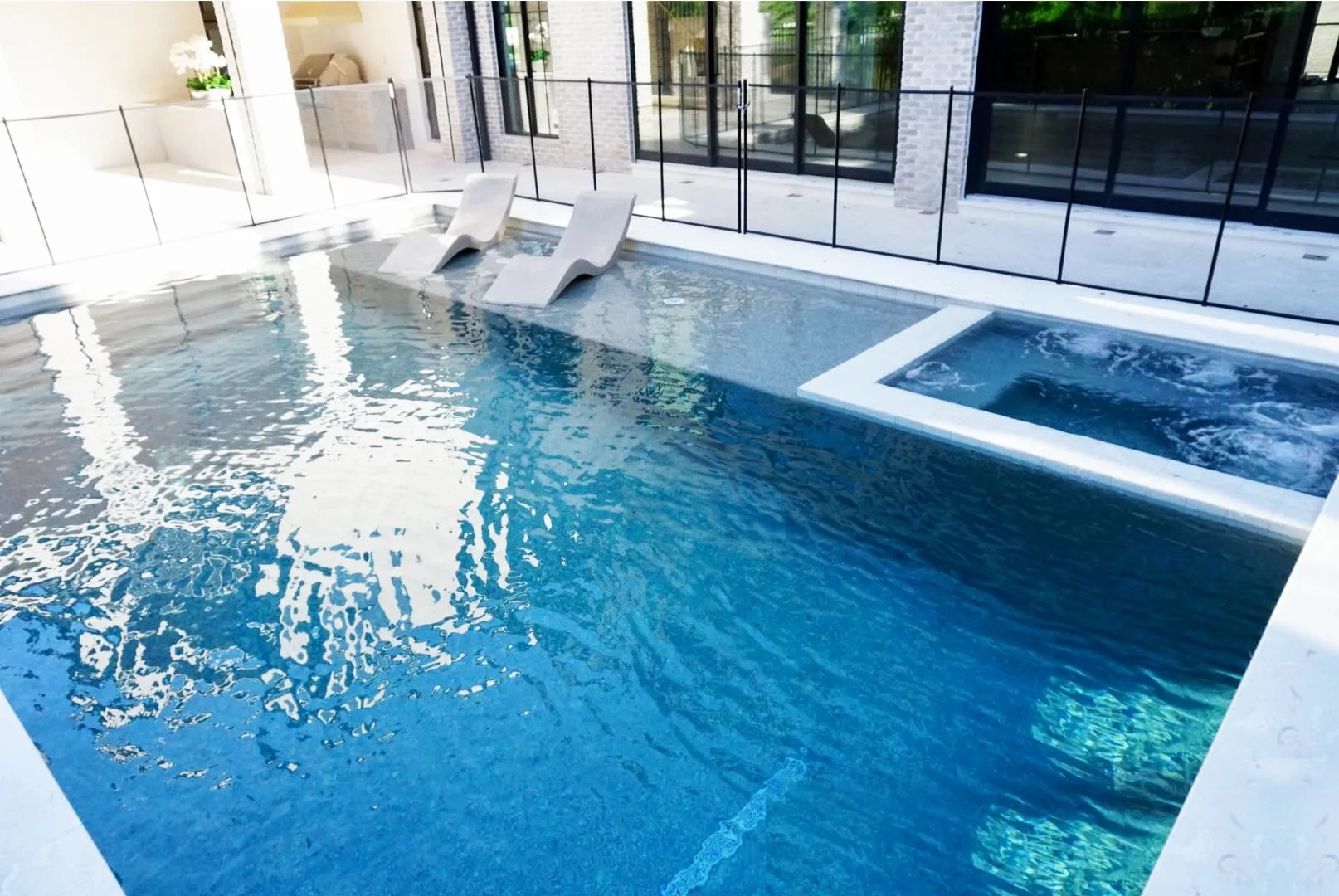
Planning an outdoor living space around your pool involves integrating the pool construction process with the surrounding functional outdoor living areas to create a cohesive, usable backyard. This integration includes coordinating deck elevations, site grading, utility routing, and structural clearances to ensure long-term durability and usability of both the pool and outdoor living areas.
What makes a great outdoor living space around a pool?
A great outdoor living space balances comfort, style, and construction practicality. It offers dedicated zones for lounging, dining, cooking, and entertaining, all while maintaining smooth flow between areas and accounting for runoff control and structural requirements. Key features include comfortable, weather-resistant pool seating, ample shade, properly ventilated outdoor kitchens, and lighting suited for evening gatherings. Thoughtful landscaping, utility concealment, and screen enclosure planning also improve both aesthetics and functionality.
Integrating Outdoor Living Layouts with Pool Construction
Outdoor living layouts should be planned alongside pool construction to coordinate runoff control, utilities, deck elevations, and structural spacing. Proper coordination ensures that the outdoor kitchen, seating areas, walkways, and fire features align with the locations of pool equipment, screen enclosure dimensions, and utility access points, preventing costly rework or functional limitations.
Deck Elevation and Site Grading Coordination
Deck elevation planning around the pool is critical to ensure safety and prevent water pooling. Decks typically slope away from the pool at a 1/8" to 1/4" per foot rate to direct runoff away from the pool and foundation areas. Poor water management around outdoor kitchens, patios, and pool decks can cause water accumulation, deck movement, and long-term usability issues. Concrete deck layouts should also account for expansion joints to help manage movement and reduce cracking over time.
Utility Routing and Equipment Concealment
Utilities for outdoor kitchens, lighting, fire pits, and pool equipment should be carefully routed during construction to allow easy maintenance access while keeping them concealed from view. Planning for proper ventilation and runoff control around cooking areas prevents smoke buildup and water damage. Planning utilities and water management after decking is installed can require costly trenching or rework, so early coordination is essential. Equipment placement should also consider noise separation from seating and dining areas to enhance comfort.
Screen Enclosure and Structural Spacing Considerations
Screen enclosures require predefined structural clearances that impact pool deck layouts and furniture placement. Adequate spacing is necessary for walkways, grill setbacks, fire feature clearances, and seating to maintain safe, unobstructed traffic flow. Screen enclosure footings and dimensions should be coordinated early to avoid conflicts with patios, kitchens, and walkways. For example, in some projects, outdoor kitchens or seating walls installed too close to the pool can restrict traffic flow and limit long-term usability.
How much patio space should you plan around your pool?
Planning sufficient patio space around your pool is essential for safety, construction feasibility, and enjoyment. A minimum of 4 to 6 feet of clear deck space around the perimeter allows comfortable movement and furniture placement. For households that frequently entertain or host larger gatherings, expanding this to 10 feet or more provides ample room for outdoor dining sets, lounge chairs, and additional entertainment features while accommodating structural and clearance requirements.
- 4-6 feet: Basic walking space and small seating groups
- 6-10 feet: Accommodates larger seating and dining areas
- 10+ feet: Ideal for a full backyard pool entertainment area with multiple zones
What outdoor living features work best near a pool?
Choosing the right features can dramatically improve poolside usability and endurance. Consider these essentials along with construction and utility considerations, trimming overlap for better flow:
- Comfortable, weather-resistant poolside furniture with ample clearance for walkways
- Shade solutions like umbrellas, pergolas, or covered patios, integrated with proper structural support
- A well-equipped outdoor kitchen or grill station with utility hookups and ventilation planning
- Heating elements such as fire pits or outdoor fireplaces with safety clearances and fire code compliance
- Outdoor lounge areas with soft seating arranged to avoid interference with utility access and pool equipment
Outdoor kitchens, fire pits, and seating areas
Outdoor kitchens near the pool enable seamless dining and entertaining when properly planned for utility, ventilation, and runoff control. Ensure your layout includes prep space, grills set back from the pool to avoid splash zones, and seating areas that maintain clear traffic paths. Fire pits add warmth and ambiance, but must comply with fire code spacing requirements and be positioned to prevent obstructions or hazards. Strategically placed seating areas foster conversation and maintain efficient flow.
How do you create separate zones for entertaining and relaxation?
Effective zoning separates lively entertainment spaces from quiet relaxation areas, incorporating construction realities like site grading and structural clearances to enhance functionality. Use landscaping, furniture arrangement, and overhead structures to define zones while maintaining proper slopes and access.
- Entertaining zone: Outdoor kitchen, dining area, and bar-style seating located to facilitate service and socializing, with runoff directed away from utility areas.
- Relaxation zone: Lounge chairs, chaise lounges, and shaded seating near the pool are positioned for comfort and unobstructed movement.
- Transition spaces: Walkways and planting beds are designed with proper grading and direct movement, creating visual breaks without causing water retention.
Should you include a covered patio or pergola near the pool?
Yes. Covered patios and pergolas introduce shade and shelter, improving comfort and versatility while coordinating with site grading plans and structural requirements. They provide relief from sun exposure, define outdoor dining or lounge spaces, and offer opportunities for architectural interest and privacy screening, all while maintaining necessary clearances and access for maintenance.
- Provides relief from sun exposure
- Defines outdoor dining or lounge spaces
- Adds architectural interest and privacy screening options
How does furniture layout affect poolside usability?
Furniture arrangement impacts traffic flow, comfort, and social interaction. The layout must consider clearance from pool edges, walkways, and structural elements to maintain safety and flow during pool construction and long-term use.
- Place seating to face the pool while allowing clear, code-compliant paths for walking and emergency access
- Create small conversation clusters rather than one large grouping for flexibility and better circulation
- Ensure easy access to shade and dining areas from seating while maintaining runoff control
- Use lightweight, movable furniture for flexibility without compromising deck integrity
What poolside features are best for families and guests?
Prioritize comfort, safety, and engaging amenities while integrating construction logistics:
- Ample seating with cushions made for outdoor use, placed with proper clearance
- Non-slip pool decking with controlled slope for safe movement and water runoff
- Outdoor showers or rinse stations plumbed and drained in line with the pool system
- Entertainment systems with water-resistant speakers positioned away from splash zones and utilities
- Shaded play or hangout areas for kids and adults are designed with safety and runoff control in mind
How do lighting and visibility affect nighttime entertaining?
Proper lighting ensures safety and sets the mood for evening gatherings around your pool, while being planned with electrical codes and utility access in mind.
- Path lights along walkways to guide guests and prevent trip hazards, installed with water management considerations
- Spotlights to accent landscaping and architectural features without causing glare
- Floating LED lights or lanterns in the pool for ambiance, with durable, waterproof fixtures
- Dimmable, color-changing smart lighting for mood control integrated with outdoor electrical systems
What common outdoor living design mistakes should homeowners avoid?
- Insufficient shade leading to uncomfortable heat exposure and reduced space functionality
- Furniture blocking natural walking paths, causing safety issues and inefficient flow
- Overcrowded pool deck, leaving little room for movement and maintenance access
- Ignoring the traffic flow between the pool, kitchen, lounge, and equipment areas during construction
- Not incorporating lighting planned for nighttime usability and safety
- Poor coordination of site grading, utility routing, and runoff control, resulting in standing water or deck issues
Work With a Pool Builder Who Plans the Entire Outdoor Space
Successful outdoor living spaces are planned as part of the overall pool construction process rather than added after the pool is completed. Coordinating deck elevations, site grading, utility placement, structural spacing, and traffic flow early in the design phase helps prevent long-term usability and maintenance problems. For instance, planning utilities and runoff control after decking is installed can require costly trenching or rework.
Experienced pool builders understand how outdoor kitchens, seating areas, shade structures, lighting, and pool equipment must work together within the overall backyard layout. Proper planning also helps avoid issues such as poor water management, restricted walkways, overcrowded decks, limited maintenance access, and noise disturbances from equipment placement after construction is complete.
At Artesian Pools, outdoor living areas are planned alongside the pool to ensure the entire backyard functions as a cohesive, usable space. By approaching pool construction and outdoor living design together, homeowners can create an outdoor environment that remains practical, durable, and enjoyable for years to come.